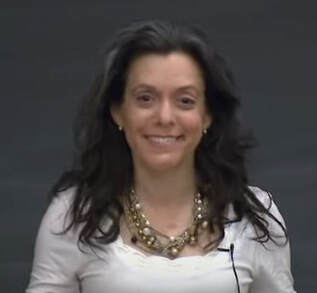
Florida has to be one of the few places in the world where, when temps fall into the 40s and below, the National Weather Service issues an advisory to "look out for falling iguanas." It's true. Those tree-hugging, tropical lizards that grow up to six feet in length hate the cold as much as we do. When it gets as cold as we just experienced in the last few days, they literally "freeze" and go into a coma-like state. If they happen to be in a tree at the time, plop! The good news, at least for them, is that they return to their normal, plant-munching selves when it warms back up. In the meantime, experts say don't wrap them in swaddling clothes or bring them inside. They could wake up suddenly and bite you. We also hear it's against the law. While the video brlow has nothing to do with iguanas, it does feature a lizard, and is pretty funny. I take every opportunity I get to post it. It's from a live TV newscast from Fort Worth, Texas-based KXAS. Pam and i were actually working for one of their competitors when this happened. Enjoy! Pam -- aka "Gigi in the 561" -- did a podcast today about languishing, and how that describes the current state of the world in 2022. It made me stop and think. What exactly does "languish" mean? According to Webster, to languish is to become "dispirited" or "suffer neglect;" to "live in a state of depression or decreasing vitality;" to become "feeble, weak or enervated (lacking vigor)." Two years into a worldwide pandemic, "languishing" seems to fit the situation to a "T." Health impact aside -- and we all know that's taken a terrible toll -- just about everyone has felt the mental impact. Namely:
Of course, the pandemic's impact to the world's economies is immeasurable. As travel writers, we felt it right away when cruises were stopped in their tracks and flying for fun turned into a nightmare of unruly passengers duking it out at 30,000 feet. We have ventured out during the last two years, but our trips have been few and far between. So here we are, languishing in 2022. Not depressed -- that's not our style. Dispirited? Sometimes. Downhearted? Desperate? All those emotions come and go from time to time. But still, above all, very grateful to be vertical and given another day to fight. The one thing we do know for sure: Whatever the state of the world, this too shall pass. "is it real, or is it Memorex?" That was a line from an Eighties ad for recording tape. But in its own way, it has relevance today, as scientists, philosophers and academics hotly debate the age-old question, "What is reality?" Fueled by movies like "The Matrix" and an explosion of interest in virtual reality (VR), coupled with new technologies that probe ever deeper into the fabric of space, time and the quantum bits that form the basis for everything, we are attacking that vexing question on all fronts. My own interest in the subject was peaked when Pam gifted me a copy of David Ewalt's book, "Defying Reality -- The Inside Story of the Virtual Reality Revolution." Its focus is mostly on the consumer electronics side, tracing the development of Oculus and other players in the space. As a latecomer to the VR scene (I jettisoned my early adopter status long ago), I got the Sony Playstation 4/VR console, mostly for our granddaughter's visits. Having said that, I quickly got pulled into the magic of moving in a 360-degree virtual environment -- piloting a spaceship from planet to planet, shooting down zombies on a fun house rollercoaster or barely surviving a shark attack on an ocean descent. It really is amazing to think you can put on a headset and be transported to worlds where anything is possible. Suddenly, science fiction concepts like the Star Trek Holodeck seem tantilizingly close at hand. And after saving the world from the zombie apocalypse, we can turn off the headset and return to reality. Or did we ever leave? A new book by philosopher David Chalmers, "Reality+," argues virtual reality is as real as "real" reality -- the ultimate affirmation that perception is reality. I'm only on chapter two, but if you want to really go down the rabbit hole, Chalmers takes a swing at ALL the BIG questions around reality, God and is what we call reality just a computer simulation? Is your head hurting yet? It's only human to wonder about these things. Plato went there in his cave allegory, Edgar Allan Poe wrote, "Is all that we see or seem, But a dream within a dream?" Even Shakespeare weighed in: "There are more things in heaven and earth, Horatio, than are dreamt of in your philosophy.” No one would doubt the pace of technology will make our virtual future more and more real. Facebook is betting the farm that we'll want to move into their Metaverse. Some predict we'll ditch clunky headsets for computer implants that will allow us to engage all our senses in the experience. With newfound power to inhabit any world or become any avatar we can imagine, will we reach a point of never wanting to leave? Maybe we'll see virtual reality as a Godsend if it helps us cope with a future climate- or war-ravaged world. Central to all of this is that three-pound lump of gray matter called the brain, which gives rise to the mind, consciousness and our sense of self. And that opens up a whole new can of philosophical worms. Quoting from the 1956 movie, "Invasion of the Body Snatchers": "The mind is a strange and wonderful thing. I'm not sure it will ever be able to figure itself out. Everything else maybe, from the atom to the universe. Everything except itself." To further cloud the water, I just read where researchers have determined what we experience is actually on a 15-second delay as our brain "mashes up" the millions of sensory inputs it receives every second and does its best to approximate the results to protect us from being overwhelmed. But does all of this really matter if we are just part of some computer game played by our descendants in a far-flung future or alien whiz kids looking for a diversion? The answer is, we just don't know, and probably can never know. The fact is, we just can't know any of the Big Question answers with any certainty. Of course, that doesn't keep us from trying, and wondering, and questioning our existence or place in the cosmos. Knowledge is both a blessing and a curse, depending on what we find in those rabbit holes. But that won't stop us from chasing those rabbits, virtual or otherwise. During every lifetime there are those days you just know will go down in history, for good and bad. Just in our lifetime, November 22, when John F. Kennedy was assassinated and September 11, the Twin Towers go down -- both evoking painful memories. But then there's today, July 20, forever remembered as the day Mankind first set foot on the moon. And now, also the day Jeff Bezos successfully ventured to space as a private citizen, one week after Richard Branson did the same thing. A new Space Age has dawned, and we are witness to what could be every bit as momentous as the Wright Brothers at Kitty Hawk, almost 120 years previous. It's an especially thrilling event, not only for the world, but also for our eight-year-old granddaughter, Cate, and all the kids of her generation. They have a real chance to take that "road to space" that Bezos referenced, dreaming new dreams and expanding their horizons beyond our imaginations. Predictably, there are the naysayers who want to rain on the parade. Just like there were when JFK pledged to land a man on the moon, and NASA was created. Why go to space at all? Don't we have enough problems here to worry about? Can't that money be better spent on Earth? It's just billionaires playing with their toys and trying to one-up the other. Putting aside for a moment the literally hundreds of new products and innovations that have come out of the space program, which have improved everyday life for all of us, are we really ready to stop trying to reach for the stars? Ask yourself, are you ready to give up your cell phone and go back to rotary dial handsets? The Model T got you around, do we need better, safer cars? Sure, progress in any field brings its own new set of problems. But if makes life easier, or better, or points the way to brighter tomorrows, it's worth our investment. It would be wonderful if we could solve our earthly problems with money. But sadly, no amount of money is likely to end homelessness, solve hunger or stop global conflicts. People don't even have enough common sense to get vaccinated against a potentially deadly virus, when the vaccines are readily available, and free. Visionaries like Bezos, Branson and Elon Musk are always looking at the bigger picture, realizing space holds the key for Mankind's long-term survival as an ever-growing population strains finite resources and climate change pushes our planet to the brink. Will their efforts benefit them financially? Sure, and they should. Just like the industrial titans of the last century spun up the oil industry, railroads and electricity. Government oversight, both then and now, is also required. That's a given. As a species, the instinct to survive is deeply imprinted in our DNA. Nature made sure of that. The commercial utilization of space is one more way we hope to ensure humans stick around for the next chapter of our millions-of-years-old story. Thank God for the Bezos's and Bransons of the world. They may not have left footprints in the lunar dust, but their accomplishments this week will have a lasting imprint on our futures. Cate, I can only imagine what's ahead in your lifetime. Reach for the stars. They are there for the taking. Hard to believe, but Pam and I have been doing this website for more than half a decade -- that's five years in layman's terms. It's been an adventure, and like most adventures, full of twists, turns and the unexpected. What started as an effort to spotlight the people and places of North Palm Beach has grown into a robust collection of travel articles, cruise news, photography, events throughout South Florida and another important segment we never envisioned at the start -- podcasts. As you already know, podcasting (definition: "a digital audio file available for downloading or listening") has taken off like a rocket over the last few years, and I'm proud to say Pam was at the forefront. She actually launched her first podcast in 2016, and since then, has done hundreds. And just like the website, she has evolved them over time. From "WPAMM in Palm Beach," a takeoff on the radio nature of podcasting to "Pamme's Chitchat," which covered a wide range of topics. Her latest incarnation is "Gigi in the 561," which launched at the beginning of the year. The name "Gigi" derives from what our eight-year-old granddaughter, Cate, calls her. And of course "561" is the Palm Beach area code. If you haven't listened to it, you should. Along with her regular topics, she has introduced a series of interviews with fascinating people. It's tailor-made for what does Pam does best -- interact with people. As one of her recent subjects told me, "Pam is fabulous. I felt like we were sitting in my living room, having coffee together." I couldn't agree more. You can find her page HERE, and an index of her interviews HERE. And know of someone who would make a good interview? EMAIL her a recommendation. By the way, you can also find her on ITUNES, PANDORA, Google, Spotify and many other platforms. Best of all, Gigi is just getting started. "561," watch out! A YEAR AGO TODAY, we were preparing to visit St. Nicholas Abbey on the island of Barbados, one stop on the 16-day Crystal Serenity holiday cruise. Read more about our trip by GOING HERE. While the pandemic kept us at home in 2020, photos may be the next best thing to being there.
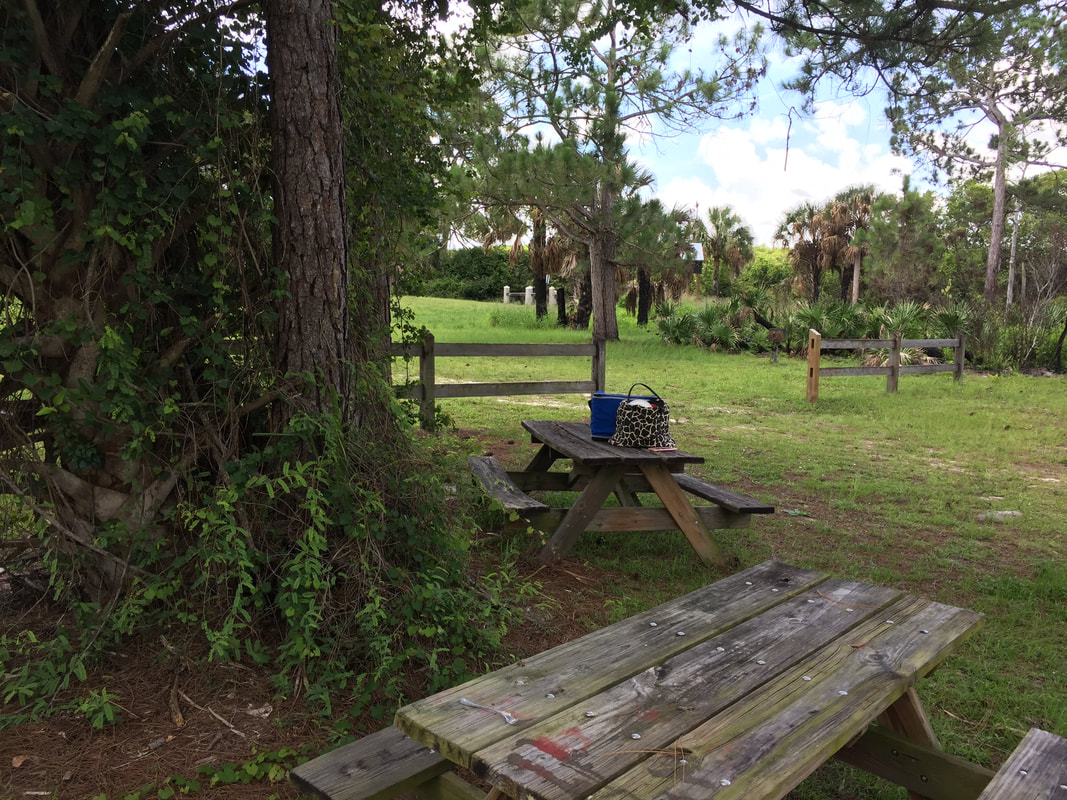
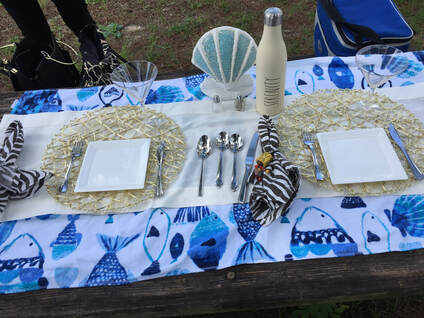
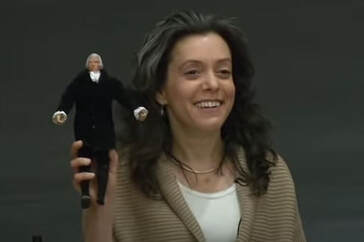
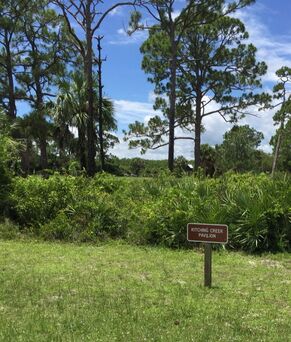
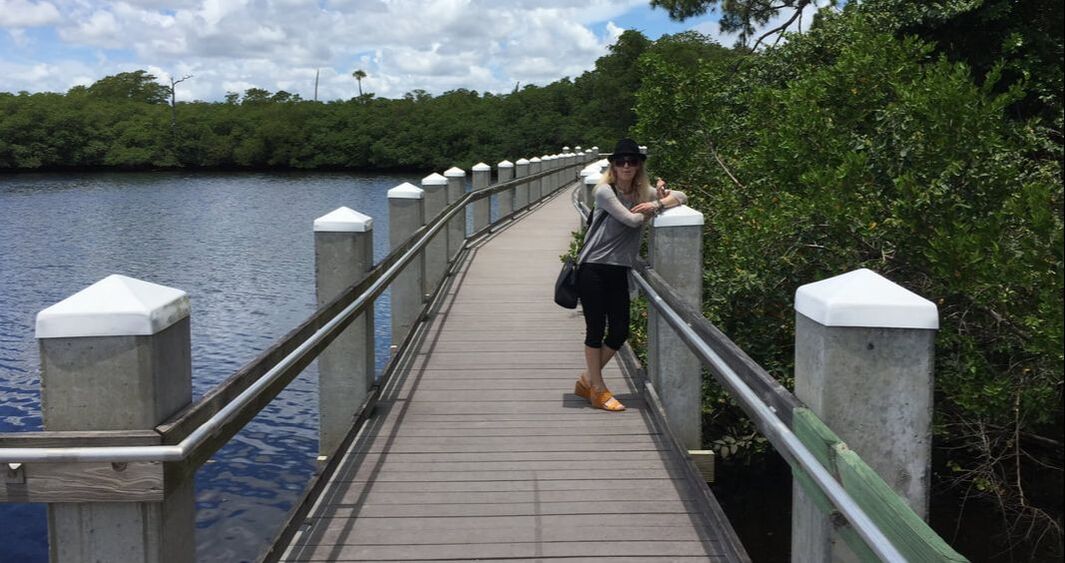
RELATED PODCAST: Pamme's Chitchat I am here today to solicit your Sorry vote. No, I am not casting dispersions on your vote; I am soliciting your support for a kid game that some adults, like Pam and I, love to play. It's the board game, Sorry. You have probably played it yourself at one point or another. The game originated in England from William Henry Story, who trademarked it in 1929. Parker Brothers acquired in 1934 and it's currently offered by Hasbro. The game itself is not complicated, which is one of the reasons we like it. Each player has four tokens (mine are "men," Pam's are "women"). You draw cards to move them around the board and into your "home." The first one to get all four home wins. The fun is in the cards. If you get an "11," you can switch places with other players. If you get a "7," you can divide it into two moves. If you get a "4," you move backwards four spaces. And it you get one of four "Sorry" cards you can send your opponent back to their home and say "Sorry!" But they know you probably don't mean it. For us, we find it best played with cocktails and snacks. One time we even played a life-size version on a Carnival cruise ship and won a trophy! By the way, we prefer the Retro Edition of Sorry, which uses the original cards and board from those early days. Now, about that vote. We just learned that "Sorry" is one of the nominees for this year's National Toy Hall of Fame, competing against the likes of Risk, Bingo, Baby Nancy, Lite-Brite and Yahtzee, to name a few. The public can vote once a day for their favorite by going to THIS LINK. So as we all gear up to vote in the 2020 election, take a few minutes to cast a vote for Sorry. We promise not to send you home! For more, listen to Pam's Podcast: Joanne Freeman (Yale Courses) COVID-19 LOCKDOWN, DAY -- DOES IT MATTER?_ Okay. We have watched everything on Netflix and Amazon; have arthritic fingers from playing online games and exhausted our collection of recipe books. And while our relentless pursuit of the perfect cocktail continues, Pam and I decided maybe it was time to do some self-improvement. How about going to Yale? It actually all started one evening when -- over cocktails -- we wondered what courses --preferably free --might be available online. A search on YouTube produced thousands of options. The one that really intrigued us the most was a Yale Course on "The American Revolution" with Professor Joanne B. Freeman. It was a series of 25 lectures, each about 45 minutes or so, that covered the lead-up to the American Revolution, the Revolutionary War and the aftermath, when a new government was formed. Thanks to "Hamilton," U.S. history is hot, and while we loved the musical, we were both big history buffs long before Lin-Manual Miranda's masterpiece hit the stage. So we set aside time every day to "attend class" and see what we could learn. Boy, did it ever over-deliver. First off, we really connected with Prof. Freeman. I don't recall many of my teachers being so energetic and engaging. Plus, it was obvious from the start she had a deep knowledge of her subject matter. Second, while you may think you know U.S. history from that time period, we learned so much more as Prof. Freeman did a deep dive into the people, events and attitudes that led to 13 colonies declaring their independence from Britain. For example, going to war was always seen as a last resort by the colonists, who only wanted to have the same rights and privileges as any other British subject. Prof. Freeman and her James Madison doll(Yale Courses) And yes, while the Founding Fathers were awesome, Prof. Freeman made them human as well, giving us insights to the good, the bad and sometimes the ugly for Washington, Jefferson, Hamilton, Madison, Adams and others. She also added some humor to the mix -- at one point, she displayed a gift from one of her students: A James Madison action figure doll, complete with Colonial garb. (Full disclosure: It was formerly a GI Joe -- Madison wasn't that buff.) As she described the events after the war ended, I was amazed at how the colonies ever came together to form a government. All together, it made the story of America that much more remarkable. There were points in the lectures where i was dying to raise my hand and ask a question. Like, when the colonists won a battle and captured thousands of British soldiers, what did they do with the prisoners of war since they could hardly feed and clothe themselves? I guess you can only get so much for free, right? As new members of the Freeman Fan Club, Pam did a little research on our teacher and discovered, not surprisingly, she is one of the leaders in her field. With multiple books, including one on Hamilton that Miranda used as source material, she has many honors and accolades to her credit. As the last lecture concluded, we were both sad it was over. We had learned so much, not the least of which is that the revolution that created a government "for the people and by the people" is still ongoing. Given our present-day political climate, you can't hep but wonder what our Founders would think about where their experiment in democracy is now. A lot of food for thought, and isn't that what learning is all about? So we raise a glass to Yale, for providing these lectures for free, and to Prof. Joanne Freeman, who has given us a new appreciation for what it means to be an American. Salud! Photos by North Palm Beach Life With COVID-19 still wreaking havoc, traveling for pleasure has ground to a halt for most of us. And yes, not to put too fine a point on it -- it sucks. Regardless, and desperate for a change of scene, Pam and I ventured out one recent Sunday for a picnic, and decided we would try some place we haven't been. That place turned out to be Jonathan Dickinson State Park in Hobe Sound. Even though the park is less than 20 miles from where we live, and we have seen signage for it about a thousand times on I-95, this was our first time to actually go there. After paying the entrance fee ($6), we proceeded on a paved road about four miles to the Loxahatchee River recreation area, where there are covered pavilions as well as free-standing picnic tables sitting under tall pines. We chose Kitching Creek Pavilion, and found a shady spot near the trail that leads to the river. Kitching Creek Pavilion There were a few dozen people there enjoying the outdoors and it was easy for us to social distance (the newest verb in the dictionary). We had an unexpected but welcome breeze that helped tamp down the heat while we enjoyed the delicious food Pam prepared, which included her special potato salad. Yum! Afterwards, we took the trail down to the Loxahatchee River, where we saw people kayaking and fishing. All the park facilities are wonderful, but we were disappointed that the restrooms were closed. Not sure the logic of having the park open but keeping those closed. Doing a little research, we discovered the park has a fascinating history. It was named after Jonathan Dickinson, a Jamaica-born Quaker merchant who had the misfortune to be shipwrecked by a storm off the Florida coast, near where the park is now located, in 1696. Captured by the Jobe Indians, he and his family, along with others aboard, were forced to make a harrowing journey some 230 miles up the coast to San Augustine. After many hardships, which Dickinson detailed in a journal, the surviving members eventually reached their original destination, Philadelphia. where Dickinson served two terms as mayor. A nice spot for a picnic! In the 1930s, a man known as Trapper Nelson homesteaded the land along the Loxahatchee River. The fur seller became known as "the Wildman of the Loxahatchee." When he died in 1968, the state acquired his land, and deeded it to the park.
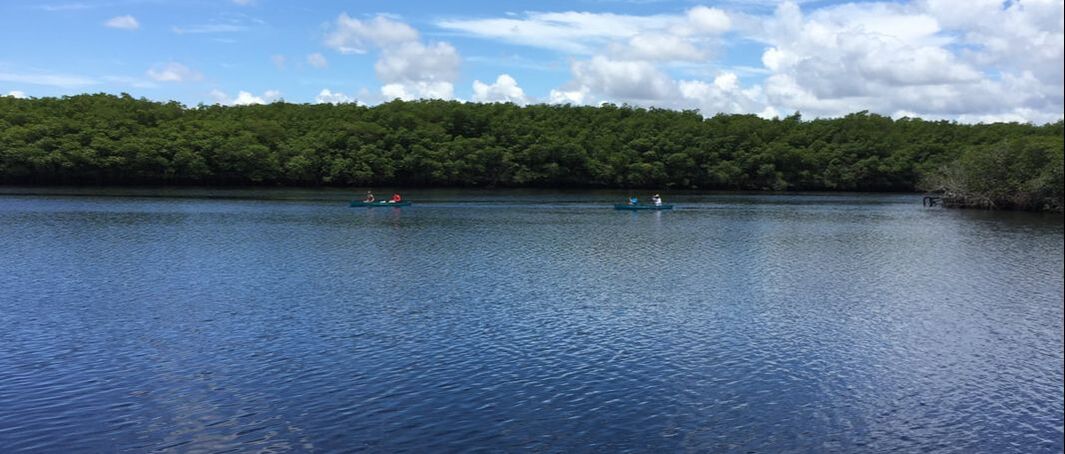
The park was also the site of Camp Murphy, a top-secret Army radar training school, in 1942. According to Wikipedia, "the camp included over 1,000 buildings, and housed more than 6,000 officers and soldiers. The camp was deactivated in 1944, after only two years of operation. Most of the camp buildings were torn down, but some of the building foundations remain. The property was transferred to the State of Florida in 1947, and opened as a state park in 1950." Who knew there was so much history that happened right where we enjoyed fried chicken. We definitely need to get out more! ON A LIGHTER NOTE: I must have watched this video a dozen times, and it still cracks me up. It's from a local report on Channel 5 in Dallas/Fort Worth which originally aired some 20 years ago. I happened to be working at the Dallas Morning News at the time, and saw it right after it happen. The joys of live TV! |
AboutYes, I know it's spelled like "Jerry." No, I don't know why it's pronounced "Gary." Archives
September 2025
Categories |


RSS Feed